

You’re Tracking Turnover. But Are You Tracking What Causes It?
If you’re leading an IDD organization right now, you probably know your turnover rate.
You might know it by department.
You might know it by supervisor.
You might even know it by month.
But here’s the uncomfortable question:
Are you tracking the thing that predicts turnover before…

Want Better Policy? Stop Explaining and Start Inviting.
Most provider leaders I talk to assume one of two things about advocacy:
“That’s for lobbyists.”
“I don’t have time to add that to my plate.”
Both assumptions make sense. They’re also quietly costing our field influence.
In a recent conversation on the IDD Leader Podcast, I spoke with Libby Vinson, CEO of the New Jersey Association of Community Providers (NJACP). And she kept coming back to an idea that’s almost suspiciously simple:
If you want lawmakers to understand your work…

What Culture Really Feels Like to Your DSPs (And Why the Smallest Moments Matter Most)
There’s a moment from my recent conversation with John Dickerson of MyQuillo that I can’t shake.
It’s not a big dramatic moment.
It’s not a six-figure initiative.
It’s not a policy overhaul.
It’s four simple words that keep echoing:
“Am I in trouble?” …

Stop Missing the Point: What Leaders Can Learn From the Stories We Don’t Tell
If you’re a leader at an IDD organization right now, you’re juggling impossible pressures.
Turnover climbs. Supervisors are exhausted. Systems get more complicated.
And while everyone is trying their best, it’s easier than ever for the work to become a checklist of tasks instead of a mission rooted in people.
When that happens, it’s not because leaders don’t care.
It’s because…

The Hidden Power of Onboarding: Why Systems That Set People Up for Success Change Everything
Most leaders in human services have had the same experience:
A new hire walks in full of hope, nervous energy, and a desire to make a difference.
Two weeks later, they’re overwhelmed.
Six weeks later, they’re gone.
And we’re left staring at the schedule, wondering how to keep the house staffed another night.
It’s not because they didn’t care.
It’s not because we didn’t care.
It’s because…

Supervisors Are the Fix (But Only If We’re Willing to Invest the Time)
There’s a quiet tradeoff happening in IDD organizations every day.
You can invest time now—coaching supervisors, clarifying expectations, practicing difficult conversations, and giving real feedback.
Or you can invest time later—covering shifts, onboarding replacements, responding to burnout, and wondering why another good employee walked out the door…

The Connection That Makes Leading in IDD So Much Easier
If you work in IDD services long enough, you eventually run into the same moment every leader hits:
You’re doing everything you can to keep staffing stable, keep teams supported, keep services high-quality… and suddenly you realize you’ve been carrying the weight alone.
Not because you’re trying to be…

3 Quiet Danger Signs Your Supervisors Are Burning Out Their Teams (and How to Reverse Them)
Burnout doesn’t usually announce itself with alarms.
More often, it creeps in quietly—through inconsistencies, mixed messages, and small supervisory habits that slowly drain a team’s confidence and energy.
In human services, those “quiet danger signs” show up long before a resignation letter (or walking out on the job) ever does. And once you see them…

Why DSP Turnover Isn’t “The Cost of Doing Business”: Insights from NADSP
Let’s be honest: If you’re leading an IDD organization today, you’ve probably experienced the same mental tug-of-war as everyone else in the field. One moment you’re brainstorming creative retention strategies, and the next you’re quietly wondering if you should just buy your HR team matching capes because they’re essentially running a full-time rescue squad.
You’re not alone.
You’re not imagining it.
And you’re not stuck…

From the Oval Office to the Pope: What Human Services Leaders Can Learn from NADSP’s Unlikely Origin Story
In 1996, a woman with Down syndrome named Annie Forts handed President Bill Clinton a report in the Oval Office that would become the first official government document to identify the DSP workforce crisis.
Standing beside her was John F. Kennedy Jr., who chaired the committee.
That moment—quiet, historic, and almost forgotten—planted the seed for a national organization dedicated to elevating the DSP profession…

The New Rules Shaping DSP Pay and Policy
For leaders in human services, there’s one reality everyone feels but few can easily fix: you can’t deliver great care without a stable workforce.
The struggle to hire and keep Direct Support Professionals (DSPs) has shaped nearly every conversation in the field for years — and while the headlines often focus on crisis, the truth is more complex. Across the country, DSP wages are rising, turnover is finally trending down, and there’s new momentum behind workforce reform.
But beneath that hopeful trendline, something bigger is unfolding.

The State of the DSP Workforce (And Why It Matters)
Every provider leader knows the tension: you can’t deliver great services without a stable, supported workforce—and yet the workforce itself feels harder than ever to sustain.
I recently sat down with Laura Vegas of the National Association of State Directors of Developmental Disability Services (NASDDDS) and Dorothy Hiersteiner of the Human Services Research Institute (HSRI)—two of the leading voices behind the National Core Indicators (NCI) State of the Workforce Survey. It’s the most comprehensive dataset we have on DSP turnover, tenure, wages, and workforce stability, and it’s helping states and providers alike turn numbers into strategy.
Their findings don’t just tell a national story…
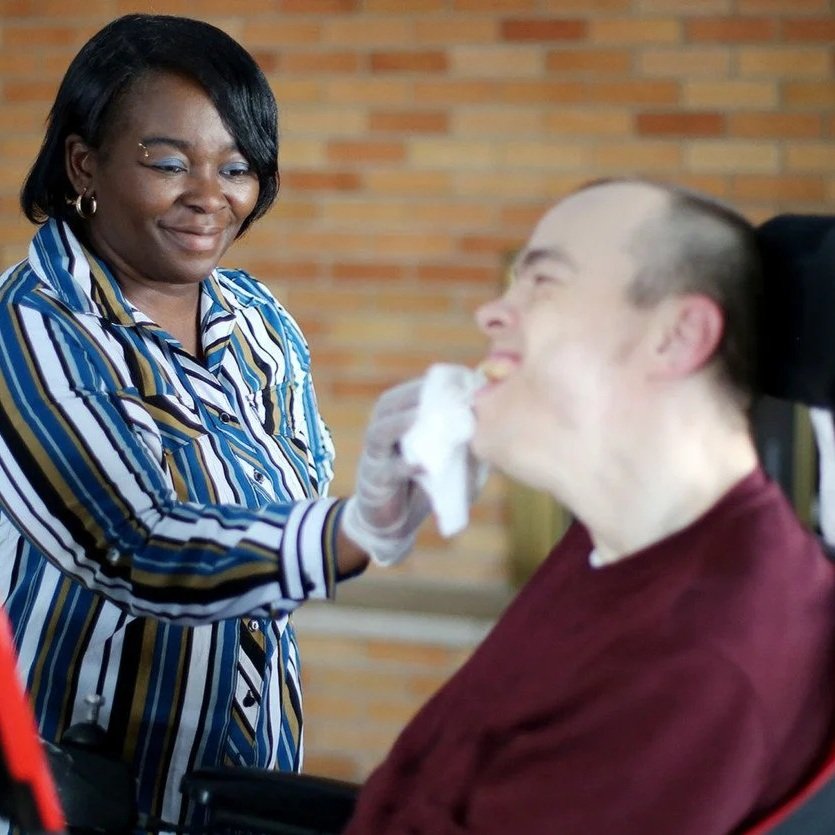
What Really Keeps Staff (It’s Not Pay)
There’s a hard truth most leaders in disability services know but rarely say out loud:
You can’t pay people enough to stay if the culture isn’t right.
Yes, fair pay matters. But when direct support professionals (DSPs) and supervisors describe why they stay, the stories almost never begin with a paycheck. They begin with…

The One Question That Doubled Staff Retention (and Could Change Yours Too)
When you’re leading in human services, it can feel like you’re constantly running to catch up. You’re short-staffed, stretched thin, and still trying to keep morale up. So when you hear that another organization has actually doubled their staff retention, it’s natural to wonder: Okay, what are they doing that we’re not?
That’s exactly what caught my attention when I sat down with the leadership team from CHI Friendship in North Dakota. Their story isn’t about big budgets, fancy recognition software, or flashy initiatives. It started with something much smaller—and surprisingly simple.
It started with one question…

What If IDD Care Worked Like Uber (But for All the Right Reasons)?
Every once in a while, you hear an idea that makes you stop mid-sentence.
That’s exactly what happened when Dr. Mike Strouse started describing how GoodLife Innovations delivers care—not just through group homes, not just through shift rotations—but through neighborhoods.
Yes, neighborhoods.
It’s part of what they call their Neighborhood Network Model, and it’s so different—and so effective—that it might…

Weekend Warriors and the DSP Workforce Fix I Never Saw Coming
For years, I’ve heard the same refrains from human service leaders: “We’ve tried everything—better onboarding, stay interviews, recognition programs, you name it—and we’re still short-staffed.”
So when I sat down with Dr. Mike Strouse, CEO of GoodLife Innovations and founder of GoodLifeU, I expected to hear more of the same: a few clever ideas about engagement or coaching or culture.
Instead, my jaw hit the floor…

Think Your Turnover Isn’t That Bad? The Blind Spots Costing Agencies Thousands
Most agency leaders can quote their turnover rate.
“We’re at about 35%.”
“That’s not great, but it’s about the national average.”
Here’s the problem: those numbers are lying to you.
When you dig deeper, you often find…

Breaking the Cycle of High Turnover in Human Services: Practical Lessons from UMN Experts
If you’re leading a human services agency right now, you probably know the feeling: vacancies are piling up, overtime is draining your budget, and every time you hire someone new, you’re already bracing for when they’ll quit. It’s exhausting—and worse, it can feel like there’s no way out.
But here’s the truth: there is a path forward. Agencies across the country are proving it’s possible to…

From Family Startup to IDD Industry Standout: Lessons from CARES of Western PA
If you’ve ever worried that growing your organization might mean losing the culture that made it special, you’re not alone. Many leaders in human services face that tension: more staff, more regulations, more complexity… and less of the closeness and agility that got you started.
CARES of Western PA shows that it doesn’t have to be that way.
Over the last decade, this family-owned agency has grown from…

How This IDD Provider Grew from 4 to 100 Employees Without Losing Their Heart
What does it really take to grow an IDD provider agency without burning out your culture—or your people?
CARES of Western PA has the answer. In just one decade, they scaled from 4 employees to nearly 100. Even more impressive? They’ve maintained a family-like culture, created pathways for staff growth, and…